

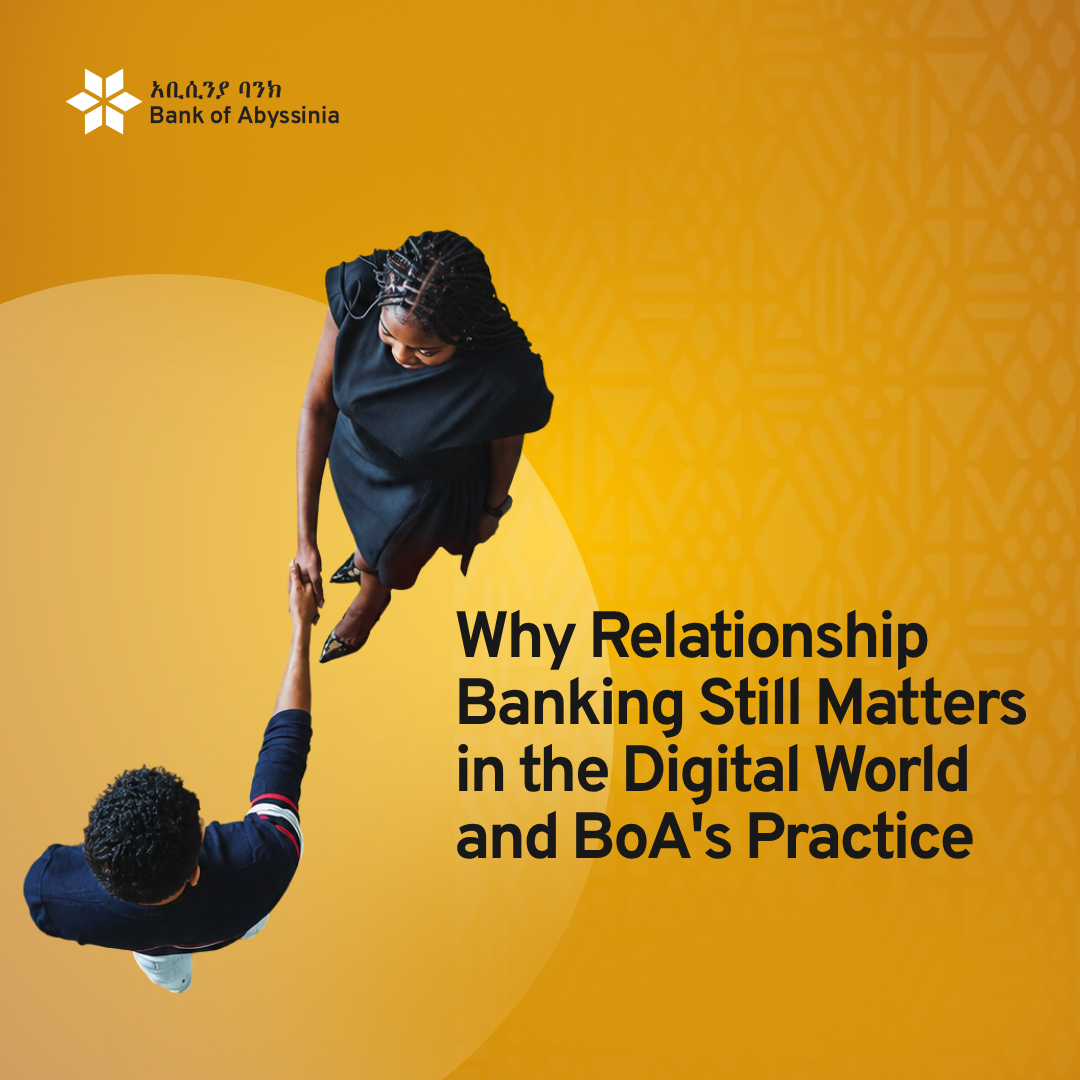
The banking industry is experiencing one of the most profound transformations in its history. Digital platforms, mobile applications, artificial intelligence and fintech innovations have reshaped how individuals and businesses access financial services. Transactions that once required face-to-face meetings can now be completed in seconds through smartphones.
While this digital evolution has delivered unprecedented convenience and efficiency, it has also raised an important question: does relationship banking still matter in the transactional world? The answer is yes. Despite rapid automation and self-service models, relationship banking remains a cornerstone of trust, personalization, and long-term value creation.
Transactional banking focuses on standardized products, automated processes, and high transaction volumes. For routine activities such as bill payments, balance inquiries, or simple transfers; digital platforms perform exceptionally well.
However, in a system dominated by transactions, customers may feel reduced to data points rather than individuals with unique goals, fears and aspirations. Technology excels at processing information, but it struggles to replicate empathy, judgment, and nuanced understanding—qualities that are critical when financial decisions carry emotional and long-term consequences.
Relationship banking is built on long-term, trust-based interactions between financial institutions and their clients. Instead of focusing solely on transactions, it emphasizes understanding the client’s broader financial journey.
At its core, relationship banking is defined by:
- Trust and loyalty, developed through consistent and transparent interactions
- Personalized financial advice, tailored to individual or business needs
- Holistic support, covering life events such as education planning, home ownership, business expansion or retirement
- Proactive engagement, anticipating challenges and opportunities before they arise
This approach is particularly valuable for businesses, high-net-worth individuals, family enterprises, and clients with complex financial requirements. While automated systems provide efficiency, they cannot fully address intricate financial structures, strategic growth plans, or emotional concerns during periods of uncertainty.
The future of banking does not lie in choosing between digital innovation and human connection. Instead, it lies in integrating both. Technology and relationship banking are not opposing forces; they are complementary.
For Bank of Abyssinia (BoA), relationship banking is an important part of how it differentiates itself in Ethiopia’s competitive banking environment. BoA serves a broad customer base ranging from individual retail clients to Small and Medium Enterprises (SMEs) and large corporates. It positions itself as a bank committed to providing exceptional, customer-centric services, which aligns with the core principles of relationship banking — understanding client needs, offering tailored solutions and maintaining consistent engagement.
In practice, BoA’s relationship banking encompasses for instance
personalized service and financial solutions. That means relationship banking means moving beyond one-off transactions to offering customers a comprehensive set of products that fit their broader financial needs. For example, this could involve linking savings accounts with credit facilities, business loans, trade services, or digital platforms, all designed to support a customer’s growth and financial goals. This consultative service helps position BoA as a partner rather than a vendor.
In addition, by building deeper knowledge of individual customers’ financial behavior, BoA can foster stronger loyalty. Clients who feel understood and supported — whether an individual saving for future plans or a business expanding operations — are more likely to maintain a long-term relationship with the bank. This relationship banking philosophy also aligns with research showing that banks using relationship strategies tend to retain customers and generate repeated business.
Apart from these, BoA has invested in advanced digital platforms — such as the Temenos Infinity system for retail and business banking services — that support a seamless customer experience across channels. These digital tools help streamline on boarding, reduce service friction, and enhance accessibility, reinforcing the bank’s customer-focused approach.
Overall, Bank of Abyssinia’s relationship banking reflects a shift from transactional interactions to long-term partnerships. The bank seeks to understand and anticipate client needs — offering tailored and technology-enhanced solutions — with the aim of increasing customer satisfaction, loyalty, and lifetime value. This approach helps BoA not only retain existing clients but also attract new customers seeking a bank that supports their broader financial journey.
Leave a Reply